top of page

INSIGHTS ON CULTURAL SAFETY IN PRACTICE
Explore reflections, stories, and insights on Indigenous cultural safety in practice. From equity and education to organizational learning, these writings invite thoughtful dialogue, community reflection, and deeper understanding across sectors.
Search


In The Interest of Time
Several years ago, a community member invited me for a coffee so we could get acquainted. As we sat in conversation at the Starbucks in Chapters, he shared with me how much he valued our recorded library, but that it was a lot to wade through when you are looking for guidance on one specific things: like what to consider when visiting a community for the first time, how to approach a land acknowledgement, or how to provide care in a culturally respectful way. It would be wond

Kim Trottier
9 hours ago3 min read


Put Your Foot on the Brakes: Standing Up to Indigenous Specific Racism
Even though my son, Andrew, graduated over two years ago, I still follow the Facebook page of the school he attended. Last week, I was pleased to see a post about how the school had acknowledged Orange Shirt Day, and I quickly hearted it. Then I noticed a comment and decided to read it. I felt a flash of frustration when I saw: “There is a lot of emotion, nuance and politicization around this day. I really wish we’d keep the young kids, who don’t think critically and are emot

George Harris Jr
Oct 137 min read


1000 Cuts To The Spirit
Last week, George and I had the pleasure of sharing in some great work together, something that brings us both a lot of fulfillment. And so, last Thursday I made my way to the Tsawwassen ferry terminal and jumped into the back of George and Becca's truck, and we made our way to our hotel in Richmond together. George was first into the hotel while I dug my suitcase out of the box, perhaps 90 seconds ahead of me. Becca stayed outside, getting the truck sorted out. I walked into

Rebecca Harris
Oct 59 min read


Little Orange Flag
Happy Teaching Tuesday, everyone. This past week has been a hard one for survivors and their families. Every time I turn around, I'm confronted with denialist rhetoric — and this past weekend, the display put forward by the Second Sons was so bold, so uncaring, it was hard to believe. Orange Shirt Day is tomorrow. Today, our dear friend Wholwolet'za reminds us of the importance of small symbols of solidarity — a message that feels even more necessary in light of the ignorance
George Harris Jr
Sep 294 min read


Superhero's and Stops Signs
Content note: This post includes references to the physical, mental, and sexual abuse Indigenous people experienced for speaking their languages. Last week I saw posts about the new stop sign in Tsawwassen, written in hən̓q̓əmin̓əm̓. Some people were celebrating it. Others had a lot to say about why it shouldn't be there. George was watching the same conversation, and he had something to say too. Uy skweyul siiye'yu (Good day friends), I hope this finds you and your loved one
George Harris Jr
Sep 224 min read


Speaking Against Residential School Denialism
Content Warning: Residential School Denialism A few weeks ago a post came across my social media feed that caused me to gasp. A popular right-wing media site was promoting their own line of orange shirts, available in kids' and adult sizes, printed with statements like: "Dig Deeper" "Buried Truth" "Respect My Property Rights" I sat with that for a while. I thought about my dear friends in community who lived through residential schools, who have shared their truths and their
George Harris Jr
Sep 154 min read


The Recliner
Uy skweyul siiye'yu (Good day friends), Over the next few months I am going to be weaving through Teachings Tuesday's that feature one of our incredible Mentors: who they are, how they came to share in this work, and a few of the reasons we love them so much. This week I'd like to introduce you to my dear friend, Daniel Elliott of Stz'uminus First Nation. And to do that, I have to go back quite a few years. In 2017 I had the amazing good fortune to meet an incredible man who
Kim Trottier
Sep 83 min read


Called By My Name
I remember back in 2014 when I started working in Coast Salish communities. Distinctly I remember being told the language of the people here: Hulquiminum. It was so foreign to my brain and my tongue, I wondered how I would ever remember it. The same thing happened when I met my friend Qwustenuxun. And then Wholwolet'za. At first it seemed so complicated, but now I don't think twice about any of it. It can be intimidating at first. And then one day, it's second nature. When Ge
George Harris Jr
Sep 14 min read


What It Means to Witness
Two weeks ago, George and I spent an afternoon in the Feast House on Grouse Mountain, presenting to a group of health regulators. We talked about cultural safety, complaints pathways, board recruitment, licensing, all the quiet machinery that decides whether Indigenous Peoples trust a system or not—aspects of healthcare often ignored in abstract policy talk. We discussed the granular questions of who gets to define safety, and who has been carrying generations of justified he
Kim Trottier
Aug 255 min read


The Meaning Behind the Culturally Committed Logo
A teaching from Stuart Pagaduan, Coast Salish artist Stuart Pagaduan opens with a greeting in his language: 'Uy' skweyul. Good day. He is a Coast Salish artist, and at the Longhouse Experiential Workshop, he sat with us to share something we have never explained publicly in quite this way: the teaching behind the Culturally Committed logo. Most of us see the logo every day. The heart. The figure at the centre. The birds surrounding it. But Stuart's explanation of what each el
Kim Trottier
Aug 202 min read


Microagressions 2.0
LISTEN TO THIS TEACHING HERE: Uy skweyul, everyone🧡 I'm Rebecca Harris and I am stepping in again for Kim today. A while back, George wrote about the microaggressions he carries and what it's like to move through the world as himself, every day. I remember what it took for him share that. It's one thing to carry something quietly. Its another thing entirely to put it into words and hand it to hundreds of people you may never meet. That's not a small thing to do, and I don't
George Harris Jr
Aug 184 min read


Learning to Walk, Learning to Talk, Learning to Say My Name
Uy skweyul, friends 🧡 A few weeks ago, George was sitting in a meeting about a land acknowledgement when a staff member asked him a simple question: did he prefer to be called by his Traditional name, or his English one? He told us how much that question meant to him. Not because it was polite, but because of what it showed: someone paying attention, someone willing to ask instead of assume. That question opens up into something bigger for this week's Teachings Tuesday. Geor
George Harris Jr
Aug 115 min read
We Put Our Hands Up
In April, at our longhouse event, we finally sat Stuart Pagaduan down in front of a camera. It had taken five years to get there. Five years of coordinating schedules, of knowing this conversation needed to happen but never quite finding the moment. That day, it did. The story actually starts back in the spring of 2021. I was searching for a Coast Salish artist to create the Culturally Committed logo, and I wanted to get it right. I remember talking it over with my friend Jen
Kim Trottier
Aug 42 min read
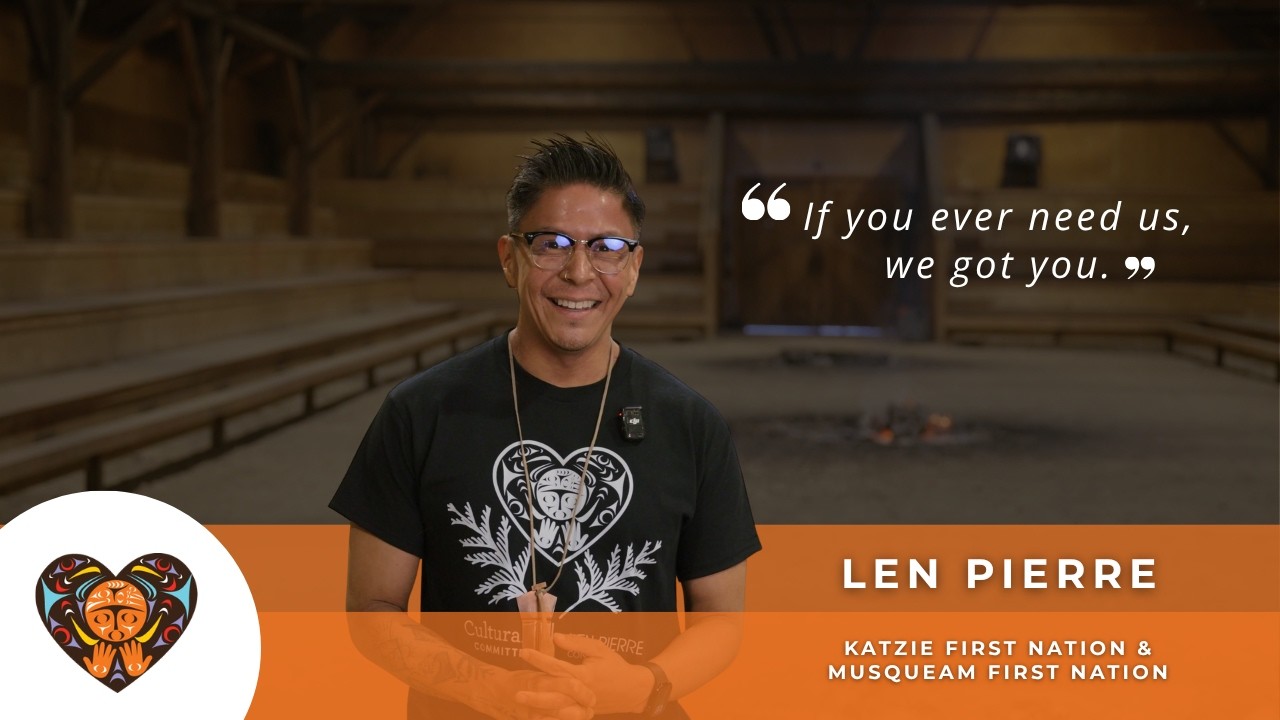
This Work Was Never Meant to Rest on Indigenous Shoulders Alone
A conversation with Len Pierre (Pelikul), Coast Salish, Katzie & Musqueam First Nations Len Pierre's ancestral name is Pelikul. He is Coast Salish, from Katzie First Nation on his father's side and Musqueam First Nation on his mother's side, and he is the CEO of Len Pierre Consulting. He has been a mentor, advocate, and steady presence in the Culturally Committed community for years. In a recent conversation recorded at the Longhouse Experiential Workshop, Len said something
Kim Trottier
Jul 313 min read


Willing to Be Humbled
A guest in one of our recent community calls said something that's been sitting with me for the past couple weeks. They'd just come through their first circle with Culturally Committed, and the experience had been impactful. They were considering how their team might benefit from participating in the work, but were concerned that some might not be quite ready yet. I want to sit with that for a moment, because it's not a small thing to say, and it's not always wrong. Some peop
Rebecca Harris
Jul 284 min read


Decolonizing Language: The Words We Choose, and Why They Count
The words we use carry the weight of history. Learn what decolonizing language means, which terms to rethink, and how to shift your communication with Indigenous communities.
Kim Trottier
Jul 247 min read


Indigenous Resurgence: What It Means, and What It Asks of Us
Indigenous resurgence is more than a movement. It's a reclaiming of land, language, culture, and self-determination. Explore what it means and how allies can support it.
Kim Trottier
Jul 248 min read


Cultural Safety vs. Cultural Humility: What's the Difference?
Cultural safety and cultural humility are often used interchangeably, but they're not the same thing. Understand the key differences and why both are essential.
Kim Trottier
Jul 248 min read


What Is Cultural Safety? Understanding What It Means to Feel Seen
Cultural safety goes beyond awareness. Learn what it means to create spaces where people feel respected, safe, and free to be themselves.
Kim Trottier
Jul 247 min read


Let It Breathe
Happy Teachings Tuesday, everyone. Today's message is shared with us by our dear friend and Mentor, Wholwholet'za, and is centered around time. In the context of modern agenda's, and contrasted against how cultural time unfolds. We hope you find it helpful. Since the early years of Culturally Committed, we have been asked the same question time and time again: How do you work with Indigenous People in a good way? And every single time I hear it, I feel the weight and the beau
George Harris Jr
Jul 218 min read
bottom of page